

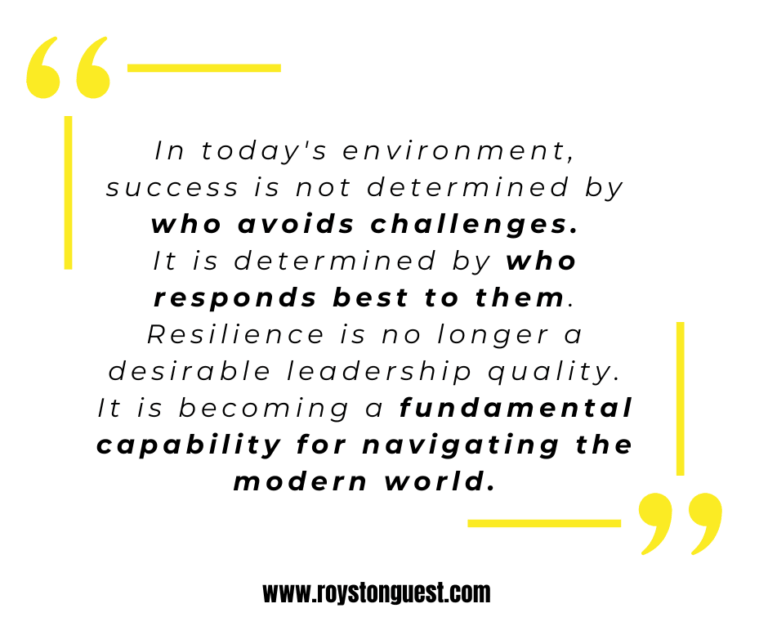
- Resilience is a multidimensional capability that depends on the interaction of infrastructure, technology, governance and social outcomes across interconnected systems.
- Control of AI infrastructure, compute, data and supply chains is becoming a major source of geopolitical and economic power, creating new forms of dependency and systemic risk.
- AI-driven personalised influence and disinformation are transforming information ecosystems, making transparency, trust and source verification essential components of resilience.
The Cambridge Risk Symposium 2026 brought together leaders from academia, business, government and industry to examine how companies and societies build resilience in a world where artificial intelligence, geopolitical fragmentation and information overload reshape the foundations of globalisation. As risks become more interconnected, fast-moving and systemic, traditional approaches to governance and risk management are proving increasingly inadequate. The discussions summarized in this blog entry highlighted not only emerging vulnerabilities but also opportunities to strengthen resilience through better systems thinking, technological governance and strategic collaboration.
Panel 1: What is the meaning of resilience?
The first panel challenged the conventional notion of resilience as simply recovering from disruption. Resilience should instead be viewed as a capability: The ability to anticipate, adapt, absorb shocks and continue functioning amid uncertainty. Resilience is increasingly multidimensional, extending beyond infrastructure and organisations to encompass social, economic, technological and environmental outcomes.
The discussion explored resilience across energy systems, urban infrastructure, geopolitics and business operations. In the energy sector, affordability, climate change, ageing assets and geopolitical volatility were identified as major pressures. The fact that millions of households experience fuel poverty demonstrates that resilient systems cannot be judged solely on technical performance; they must also deliver equitable outcomes for communities.
Another key theme was the growing interdependence of critical infrastructure. Energy, water, telecommunications, digital networks and transportation systems are increasingly interconnected, meaning disruptions can cascade rapidly across sectors. Digital technologies, including AI-enabled monitoring systems and digital twins, offer powerful tools for enhancing preparedness and recovery. However, these technologies require trusted governance frameworks, secure data-sharing arrangements and effective cross-sector collaboration. The panel concluded that resilience depends not only on stronger systems but also on better alignment between people, institutions and technology.
Keynote: Sovereign AI
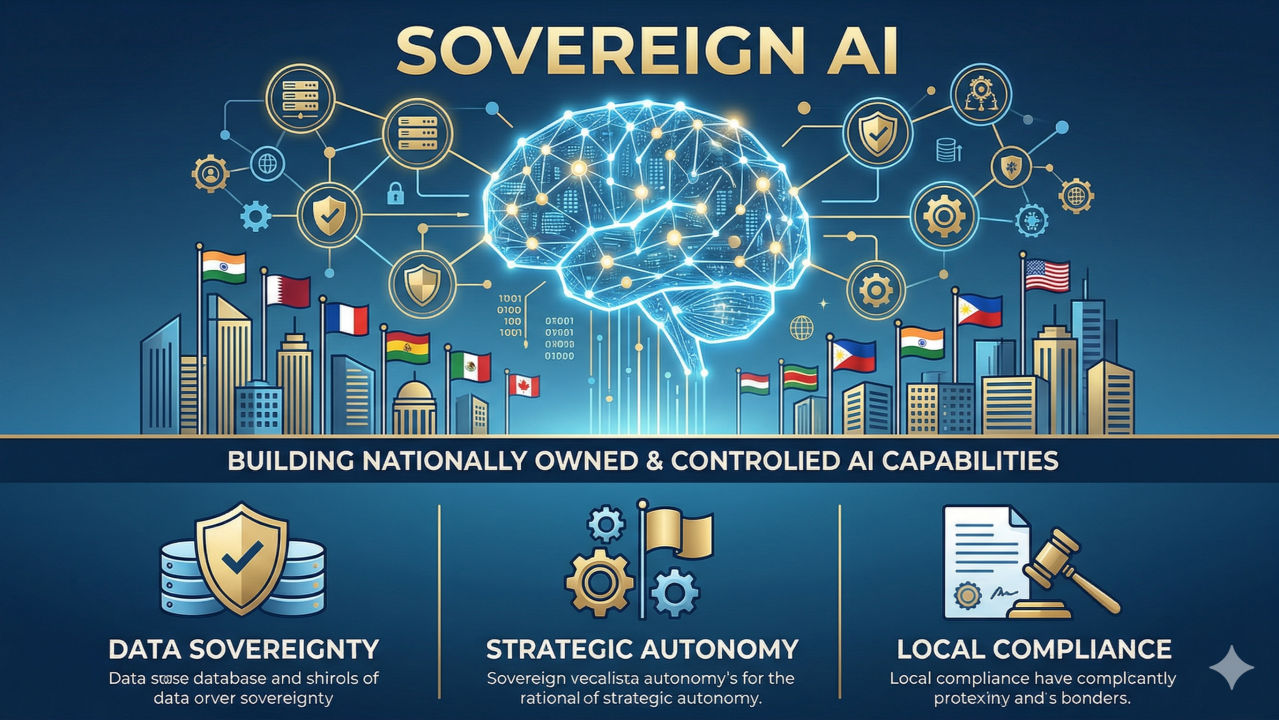
The keynote discussion on Sovereign AI introduced concerns over the growing concentration of digital power within a small number of technology providers and infrastructure operators. As AI now finds itself at a large-scale deployment stage, control over data, compute, cloud services and energy infrastructure is a critical strategic issue for governments and businesses alike.
Sovereign AI is no longer a niche policy debate but a central resilience challenge. Organisations increasingly rely on cloud platforms and AI systems operated by a limited number of hyperscale providers, creating new forms of concentration risk. The Cambridge-McKinsey Risk Prize-winning research highlighted how cloud dependency can create sovereign-level vulnerabilities that remain underappreciated.
The discussion also examined Europe’s aspirations to develop sovereign AI capabilities. While Europe possesses strengths across many layers of the AI value chain, including research, talent and regulation, it continues to lag in compute capacity, data centre infrastructure and scale. Future competitiveness thus would depend on coordinated investments across the full AI ecosystem: From energy grids and connectivity to cloud platforms, models and applications. Sovereign AI was framed not as technological isolation, but as achieving sufficient control, autonomy and resilience over critical digital assets in an increasingly uncertain geopolitical environment.
Panel 2: Concentration of power through AI and robotics
Building on the Sovereign AI discussion, the second panel explored how AI and robotics are reshaping global power structures. A central argument was that power is increasingly determined by control over systems rather than territory alone. The ability to control compute infrastructure, semiconductor supply chains, data, networks and energy resources creates new forms of strategic leverage and dependency.
Panellists highlighted the emergence of “systems power,” where ownership of the infrastructure underpinning AI translates directly into economic and geopolitical influence. In this environment, resilience is no longer only about protecting organisations from disruption; it is also about reducing dependency on critical external systems that may become sources of strategic vulnerability.
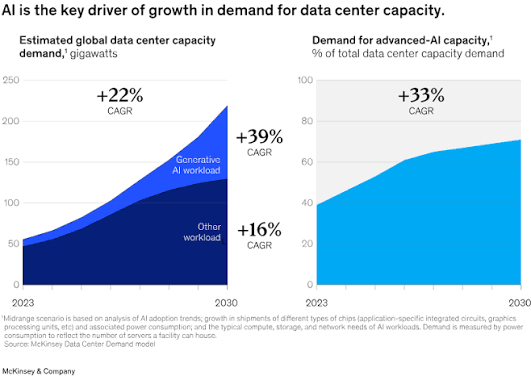
The panel also addressed AI’s environmental implications. Data centres currently account for a growing share of global emissions, and demand is projected to increase significantly as AI adoption accelerates. Yet AI simultaneously offers tools to address climate challenges through improved monitoring, resource optimisation and scientific discovery. This creates a tension between AI as a driver of environmental pressure and AI as a potential enabler of climate resilience. Stronger transparency, emissions reporting, accountability and governance mechanisms would be required to ensure that technological progress does not undermine broader sustainability goals.
Panel 3: Firms and governments operating in a hyperinformation world
The final panel focused on the rise of a hyperinformation environment in which AI enables the creation, personalisation and dissemination of information at unprecedented speed and scale. Participants warned that societies are entering an era where propaganda, persuasion and disinformation can be tailored to individuals rather than mass audiences, making influence campaigns more effective and harder to detect.
This shift creates significant challenges for governments, businesses and democratic institutions. Traditional approaches focused on content moderation and fact-checking are increasingly viewed as reactive and insufficient. Instead, greater emphasis was placed on identifying the origins of information, tracking coordinated influence campaigns and improving transparency around funding and amplification mechanisms.
A broader concern centred on the erosion of shared realities. As competing narratives proliferate, individuals often struggle to distinguish between truth, misinformation and deliberate manipulation. Hyperinformation amplifies existing social, political and economic vulnerabilities while placing greater responsibility on individuals and institutions to evaluate information critically. In a world of endless content and competing realities, trust itself becomes a strategic asset and a critical component of resilience.
Conclusion
Across all discussions, a common message emerged: Resilience in the twenty-first century is fundamentally a systems challenge. Whether considering critical infrastructure, sovereign AI, geopolitical competition, climate risk or information ecosystems, the sources of both vulnerability and opportunity increasingly lie in interconnected networks rather than isolated threats.
Success will depend on balancing innovation with governance, efficiency with redundancy, and global interconnection with strategic autonomy. As globalisation is reconfigured, resilience will increasingly become a competitive advantage for firms, governments and societies capable of adapting to a more complex and uncertain future.
Contributed by María Fernanda Lammoglia Cobo

Cambridge Centre for Risk Studies
Leave a Reply