

The Mecca Pact, which Saudi Arabia, Türkiye and Pakistan activated earlier this month, could contain the outlines of a new, autonomous security order in the Middle East. This was the conclusion of the first seminar of the Cambridge Applied Geopolitical Risk Analysis (CAGRA) programme, held on Friday 23rd October.
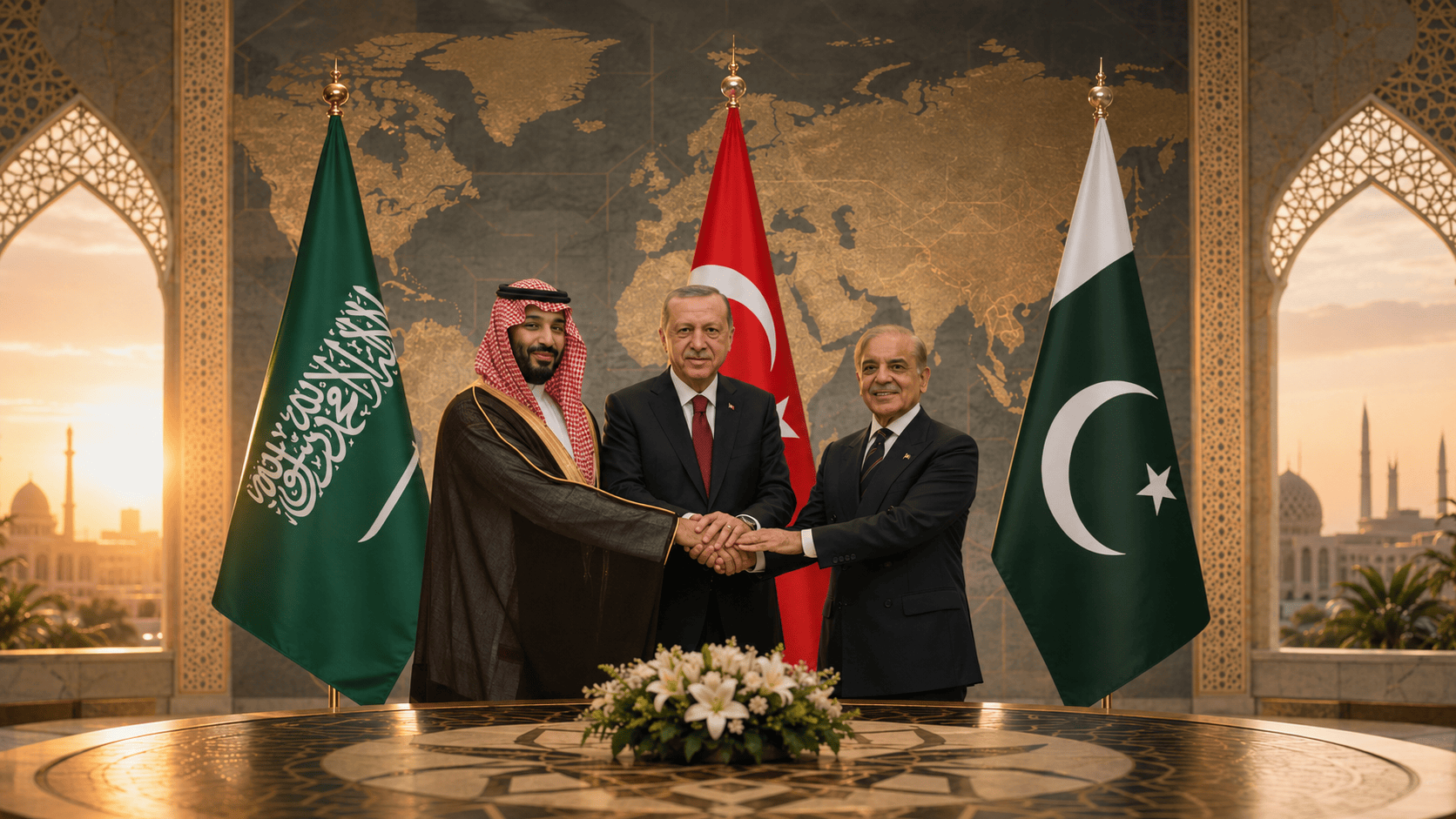
Students analysed the factors that led to the signing and activation of the agreement. Saudi Arabia faces growing threats on two fronts. To the south, the Houthis are attacking its cities and critical infrastructure. To the north, the US-Iran war has disrupted shipping through the Strait of Hormuz.
Meanwhile, Saudi Arabia’s traditional external security guarantor, the United States, has been unable to eliminate these threats.
In these circumstances, Saudi Arabia has turned to two alternative security providers: Türkiye, with its powerful military and advanced defence industry, and Pakistan, which already has troops stationed in Saudi Arabia and plays an active diplomatic role in the Middle East.
Both have responded positively. The agreement offers opportunities to consolidate relations with an important economic and security partner, to strengthen their regional influence and prestige, to protect trade and contain the effects of regional instability.
But intentions and actions are not the same thing. Türkiye and Pakistan face numerous constraints, ranging from domestic opposition to security problems on their borders. Both also have important interests in constructive relations with Iran.
They are therefore likely to proceed cautiously, concentrating their assistance on defending Saudi territory rather than participating directly in Saudi Arabia’s military campaign against the Houthis in Yemen while hoping for diplomatic progress that reduces regional tensions. Their contributions will comprise intelligence, logistical support and air defence rather than combat troops.
However, against a background of live conflict, there are plenty of moving parts that could push events in a different direction. The Houthis could target Turkish or Pakistani interests and the US’ security commitments could weaken amid growing domestic opposition to its war with Iran.
If the threat from Tehran and the Houthis persists, and American security commitments become less reliable, regional states will face growing pressure to provide for their own defence, including by forming alliances with neighbours that share their interests.
In this scenario, the Mecca Pact could eventually be remembered as an important step towards a new security architecture in the Middle East.
This post was contributed by Dr Timothy Less, Head of Geopolitical Risk at the Cambridge Centre of Risk Studies. The views and discussions reported from this event do not reflect the views of the Cambridge Centre for Risk Studies.

Cambridge Centre for Risk Studies
Latest posts by Cambridge Centre for Risk Studies (see all)
- The European Poly-crisis - 30 October 2026
- A New Security Order in the Middle East? - 30 October 2026
- Cambridge Risk Symposium 2026: Risk, resilience and concentrations of power in a hyper-connected world - 27 July 2026
Leave a Reply