

Europe could be heading towards a poly-crisis in which domestic political instability, economic weakness and external threats reinforce one another. This was the overarching theme of this year’s first guest-speaker session in the Cambridge Applied Geopolitical Risk Analysis (CAGRA) programme, featuring Emily Mansfield, Regional Director for Europe, and Francesca Al Toum, Western Europe analyst at the Economist Intelligence Unit on Thursday 22nd October.
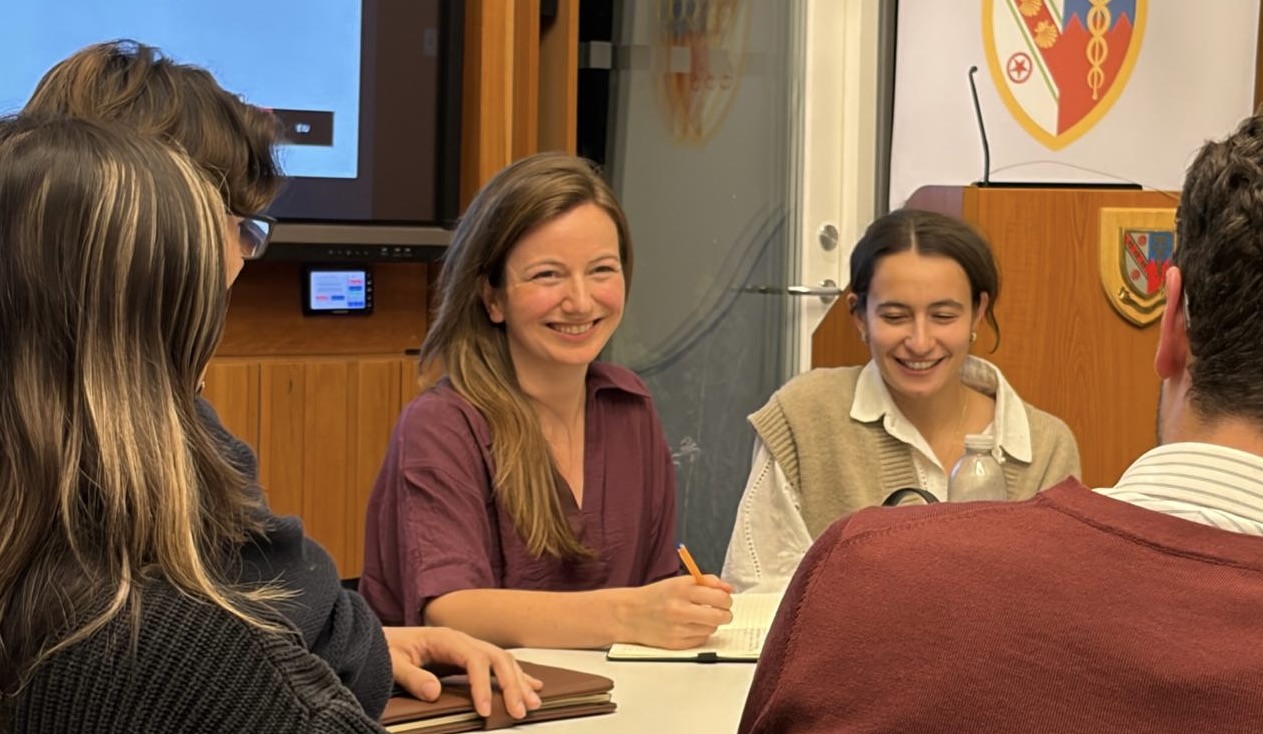
In a fascinating discussion, participants explored six interconnected risks:
Political polarisation: Discontent over living standards and immigration, and anger with established political elites, are polarising European politics. Electoral victories for national conservatives, notably Marine Le Pen in France, could provoke fierce parliamentary opposition and street protests.
Confrontation in Brussels: National conservative governments could undermine European cohesion. Le Pen’s proposals to slash France’s EU contributions could provoke bitter disputes over money and power, particularly in a Germany increasingly influenced by the AfD.
Competition from China and the US: Chinese industrial overcapacity threatens European manufacturing, while US tariffs and uncertainty over American security commitments are squeezing Europe from the other side. How much strategic autonomy can Europe retain?
Russian hybrid warfare: Russia’s grey-zone aggression threatens critical infrastructure and NATO’s credibility. European governments face a dilemma: respond forcefully and risk escalation, or hold back and risk weakening deterrence.
Ukraine: Nationalist governments and intensifying fiscal pressures could progressively undermine European support for Ukraine. A settlement that allows Russia to regroup could leave eastern Europe facing even greater security threats.
Economic stagnation and debt: Sluggish growth, low productivity, demographic decline and mounting public debt constrain Europe’s capacity to invest in defence, sustain industrial competitiveness and withstand external shocks.
But the greatest danger lies in how these risks interact. Economic stagnation is fuelling political discontent. Political discontent strengthens nationalism. Nationalism threatens European cooperation. And weaker European cooperation increases vulnerability to pressure from China, Russia and the US. Responding to those threats requires greater spending, further straining public finances and further burdening Europe’s stagnant economies.
A huge thank you to Emily and Francesca for sharing their expertise and engaging our students in such a stimulating debate.
This post was contributed by Dr Timothy Less, Head of Geopolitical Risk at the Cambridge Centre of Risk Studies. The views and discussions reported from this event do not reflect the views of the Cambridge Centre for Risk Studies.

Cambridge Centre for Risk Studies
Latest posts by Cambridge Centre for Risk Studies (see all)
- The European Poly-crisis - 30 October 2026
- A New Security Order in the Middle East? - 30 October 2026
- Cambridge Risk Symposium 2026: Risk, resilience and concentrations of power in a hyper-connected world - 27 July 2026
Leave a Reply